


Wells Fargo is one of the Big Four US banks, with a huge customer base, especially among small businesses. For lenders operating in the US market, Wells Fargo business statements are a regular fixture in application packs. Their statements have a certain old-school corporate feel - serif fonts, wide layouts, lots of whitespace. Professional looking.

But when you try to extract the transaction data for lending analysis, Wells Fargo statements have some surprises that make them trickier than they appear.
Page One: No Transactions
Open a Wells Fargo business statement and the first page gives you this:

"Your Business and Wells Fargo." A thank-you message. A loyalty blurb. No transactions anywhere on the first page.
This is a problem for parsers that expect to find transaction data on page one. They will scan the entire page, find nothing useful, and either throw an error or start misinterpreting the marketing text as data. For lending teams processing applications at volume, a parser that fails on page one of a common bank format means manual intervention on a significant percentage of cases. You need extraction logic that knows Wells Fargo buries the actual financial content starting on page two.
A Clean Activity Summary
When you do get to page two, Wells Fargo provides something genuinely useful:
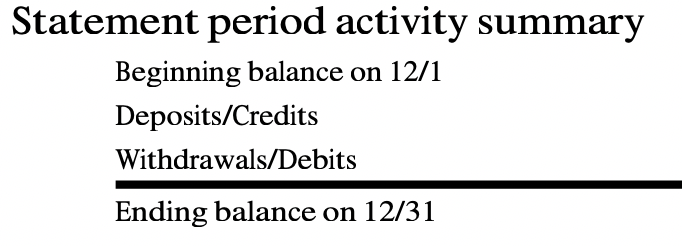
Statement period activity summary. Beginning balance. Deposits/Credits. Withdrawals/Debits. Ending balance. Dates included. This is one of the better summaries you will find on any US bank statement.
For a lending platform, this is gold - you can use these totals to verify that every transaction was extracted correctly. If your deposits do not add up to the summary figure, you know something was missed. This kind of built-in cross-check is exactly what lenders need to trust automated extraction. Not every bank gives you this level of verification.
The Transaction Table
Below the summary, the transaction history begins:

Date. Check Number. Description. Deposits/Credits. Withdrawals/Debits. Ending daily balance. Six columns, clearly labelled. The Check Number column is a nice touch for business accounts - it means lenders can match payments back to specific checks, which is useful for verifying business expenditure patterns.
But notice that last column. It says "Ending daily balance" - not "Balance" or "Running balance." That distinction matters.
Daily Balances, Not Running Balances
Most bank statements show a running balance that updates after every transaction. Wells Fargo does not do that. They show the balance at the end of each day.

Look at this deposit - $1,280.00 coming in. But where is the balance? It is blank. If there are multiple transactions on the same day, only the last one shows the ending daily balance. The rest have an empty balance column.
For a lender performing cash flow analysis, this creates verification gaps. You cannot confirm each transaction individually against a running total. You can only check the balance at the end of each day. And if your extraction misses one transaction in a busy day with ten entries, the daily balance will not tell you which one went wrong. For high-volume lending operations, this kind of ambiguity creates risk in the data pipeline.
The Totals Row
At the very end of the transaction list, Wells Fargo includes this:

Totals. $6,895.20 in deposits, $13,164.64 in withdrawals. Useful for verification, but it is not a transaction. It is a summary row sitting right there in the transaction table.
A naive parser will include this as the last transaction in your spreadsheet. Suddenly your totals are doubled because the sum row got added to the actual transactions. For a lender, this means the applicant's cash flow figures are grossly inflated - a data quality issue that could lead to incorrect credit decisions. You need to recognise this row and either strip it out or move it to a separate summary section.
Why This Matters for Lending Operations
Wells Fargo statements are actually one of the better-designed formats out there. The activity summary is useful. The column headers are clear. The Check Number field is a thoughtful addition for business accounts.
But the empty first page, the daily-only balances, and the totals row embedded in the transaction table are the kind of details that separate a parser that works on sample documents from one that works on real statements at scale. Every Wells Fargo statement has these patterns, and lenders who process them need extraction logic that handles each one correctly.
ExactSum's Wells Fargo-specific parsing skips the marketing page, extracts the activity summary for verification, handles daily balance gaps, and correctly identifies the totals row as metadata rather than a transaction. The result is clean, verified data that your lending team can trust.
Ready to Automate Your Lending Analysis?
ExactSum processes Wells Fargo and dozens of other bank formats automatically, so your team can focus on decisions instead of data extraction.
Book a Demo